
Capacitive Sensors: Important Tools for Industrial Automation
Capacitive sensors have turned out to be important tools within industrial automation systems and in the control of processes.
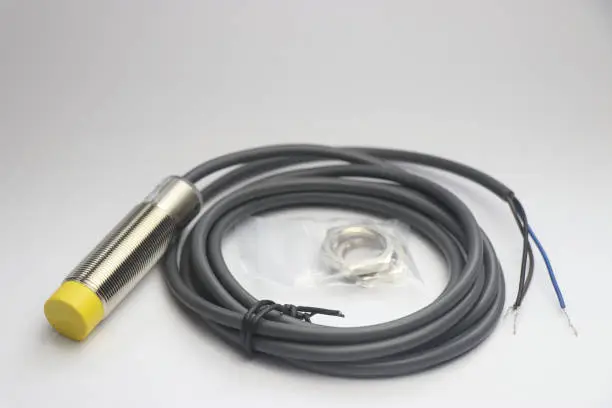
For B2B firms looking to improve the effectiveness, dependability, and scalability of their systems, these sensors represent an intelligent investment in automation technology.
Definitions of Capacitive Sensors
Capacitive sensors are classified as proximity detecting devices because they sense an object through a change in capacitance. These sensors detect the variation in electrical capacitance which occurs due to an object’s proximity to or presence near the active surface of the sensor. When a solid or liquid material enters the range of senor’s electromagnetic field, there is a change in the capacitance which is then used to produce a switching signal.
This type of sensor is characterized by detection of wide variety of different materials, which includes:
- Plastics
- Glass
- Wood
- Powders
- Liquids
- Metals
Capacitive sensors are ideal for use in industries because of their broad detection capabilities, unlike inductive sensors which only detect metal.
Uses of Capacitive Sensors in B2B Settings
All industrial sectors incorporate capacitive sensors in one way of the other. The ability of capacitive sensors to enhance automation while minimizing manual tasks on interfaces via non-contact sensing makes them particularly useful across various industries.
Food and Beverage Manufacture
Detection of products within the packaging material is done using capacitive sensors within food and beverage manufacturing. For example, they can determine if a bottle is currently full or empty, or whether a box is correctly packed with items.
Material Handling and Logistics
In automated material handling systems, capacitive sensors help identify containers whether bags or boxes irrespective of their material. This allows for smooth uninterrupted operation of conveyors and sorters without the risk of unnecessary downtime or errors.
Chemical and Pharmaceuticals Industries
For level detection in tanks and silos, capacitive sensors can help due to no contact and the ability to detect liquids through non-metallic walls. They are largely used for detecting chemical or pharmaceutical substances without contaminating the sample.
Wood and Paper Processing
Capacitive sensors are able to detect sheets or stacks of paper as well as cardboard and wood. This is very important in printing presses, packaging machines, and woodworking systems as material positioning and counting needs to be accurate for process precision.
If you want to know more on how capacitive sensors can integrate into your industrial systems, read this https://www.omchsmps.com/ru/path/proximity-switch/ which talks about sophisticated automation solutions.
Benefits of Using Capacitive Sensors in Industrial Automation
Capacitive sensors provide a number of strategic benefits for B2B clients seeking sturdy and versatile sensing systems:
Identification of Various Materials
Capacitive sensors can identify materials that are otherwise very difficult to identify with most other sensors, including granular materials, powders, liquids, and even insulating solids.
Remarkable Sensitivity and Accuracy
These sensors are highly sensitive when it comes to detecting changes in the dielectric constant of surrounding materials making them precise for level sensing and object detection.
Remote Sensing
Sensors using the capacitive method can be classified as contactless since they do not have to make physical contact with the target object. This not only prolongs the life of the sensor but also lowers maintenance requirements, especially in harsh environments where contact devices would fail over time.
Flexible Mounting Options
These can be provided in multiple configurations and sizes for flush or non-flush mounting. This means they can be conveniently implemented into both new and pre-existing systems.
Resistance to Dirt and Dust
Capacitive sensors tend to be more advantageous in industries such as woodworking, construction materials, and packaging due to lack of functionality issues that arise because of dust build-up.
OMCH offers these industrial-grade capacitive sensors compliant with industry standards to ensure sustained reliability for mission-critical operations while lowering potential downtime.
Primary Focus When Choosing Capacitive Sensors
In a B2B context, choosing the right capacitive sensor for a specific application entails considering a number of important criteria:
Detection Range
For any sensor, the detection range is dependent on the size, density, and dielectric constant of objects. Make sure to select the model that has the optimal range for your specific requirements.
Environmental Factors
If there is exposure to heavy humidity, shift in temperature, or chemicals used in your facility, then a sensor with the right housing will be needed, like IP67 or better.
Mounting And Spatial Restrictions
The type of automation and machinery determines the sensor's format and size which impacts its mounting and installation. Many vendors make accessories for small spaces.
Type of Output and Connections
A control system can manipulate various outputs like NPN, PNP, analog, or relay. One of the options is always going to be a match for existing equipment. A capacitive sensor might be one of the options.
Customization Features
Working with materials of various densities requires pre-setting location sensors. Space and sensor flexibility makes change of address such pre-settings very easy.
Capacitive sensing technology is being improved to include intelligent SPI smart diagnostics, IO-Link, and adapting for industrial IoT environments.
Captive sensing is useful in larger operational environments because of the improved data collection from sensors, advanced maintenance scheduling, and enhanced predictive decline and analytic algorithms.
With growing market complexity and superior client needs, B2B companies are recession driven to use automation with capacitive sensors. Durable capacitive sensors by performing level indicators, streamlines business operations by ensuring smooth flow for expanding enterprises.
For a fully developed solution catalog from OMCH, including proximity and modern industrial projects, check this link: OMCH.
Conclusion
Flexibility is essential in industrial automation, allowing a business to quickly add or modify systems without locking specific sensors or identifiers within devices. Capacitive sensors and their wide material range are crucial, as they can be implemented in various applications while maintaining robust accuracy. In today's B2B environment governed by lean principles, reducing cost per activity completed through labor and workflow automation is ideal, making these sensors even more appealing.
The contactless nature of their operation places these sensors far ahead of traditional contact alternatives when it comes to maintenance. Hybrids with smart factory technologies further unlock additional capabilities, setting the stage for innovations in automated production processes inheriting the legacy of precision engineering. Providing smart sensor solutions crafted for demand is how OMCH helps drive businesses forward.