
Heatsink Cooler Innovations in 2025: What’s Changing and What Still Works?
Thermal management has become a significant engineering challenge as industrial electronics, servers, and automation systems continue to shrink while increasing their performance.
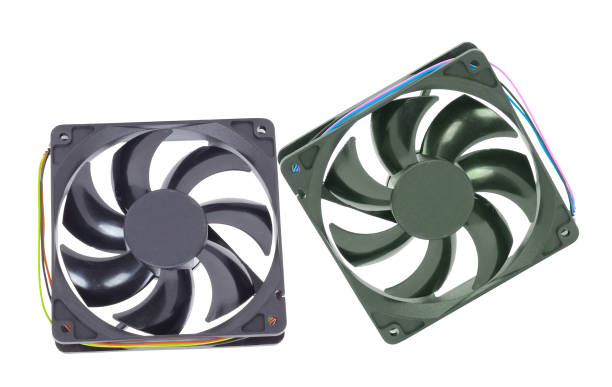
This article will look at the latest heatsink cooler trends and innovations specifically addressing practical applications and sourcing considerations for B2B market players. If you are a buyer looking for your next OEM fan solution or an engineer designing the next compact automation device—this guide will be of help.
Blurring the Boundaries between Passive vs Active Cooling
By 2025, passive vs active cooling distinction would have greatly diminished. Nonetheless, passive heatsinks (which rely on natural convection) are still used for low-power or fully enclosed applications; however hybrid systems that combine passive structures with compact high-efficiency OEM fan modules are now more popular.
The acceleration of thermal conductivity is being done using advanced passive techniques.
Thermal regulation can be improved by using graphene coatings and phase change materials (PCMs).
Finned geometries are optimized through computational fluid dynamics (CFD).
Medium to high power systems still require active elements. Innovations in low-profile axial and radial fans are being integrated directly into heatsinks to reduce bulk while improving airflow control. These compact, high-RPM fans deliver the benefits of active cooling without increasing the system footprint—an essential factor for space-constrained industrial equipment.
New Materials: From Aluminum to Advanced Composites
The material choice for a heatsink cooler can greatly affect thermal efficiency, weight and corrosion resistance. Aluminium has been dominating because of its excellent price-to-performance ratio. However, more interest is being shown towards:
- Copper-aluminium hybrids with copper as the base and aluminium as the fins.
- Magnesium alloys in lightweight applications.
- Advanced polymers and carbon-based composites, for niche applications requiring electrical isolation or unique form factors.
OEMs now demand not only better thermal conductivity but also compatibility with surface treatments, lower oxidation rates, and recyclability. Sustainable development efforts within the B2B electronics industry have brought about this need in terms of both environmental and technical specifications.
Fan Integration: Smarter, Quieter, and More Controllable
The integration of heatsink designs with OEM fan systems is beginning to change how we think about cooling. Fans are no longer standalone items; they are an integral part of the thermal ecosystem.
Important innovations are as follows: a. Fans with PWM control for immediate response to changes in temperature b. Two ball or FDB fans for longer lifespan and less noise. c. Low-noise fan blades that reduce turbulence and noise levels without loss of air flow capacity. d. Intelligent fan modules, RPM monitoring, failure alarms, thermal feedback.
An adequately designed OEM fan can improve thermal performance and also support predictive maintenance and better energy management – a major concern in sectors like industrial automation, robotics and energy systems.
Customization and Modularity: Meeting Application-Specific Needs
The most significant transformation in the heatsink cooler market has been toward application-specific design. Instead of using one-size-fits-all solutions, business-to-business (B2B) customers want more modular or entirely bespoke cooling units that match their equipment layout and build.
Customization also covers:
Fan positioning and orientation optimized for airflow paths through the enclosure.
Mounting hole patterns and form factors that are custom-made for unique PCBs.
Marine, mining or food-grade environments requiring coatings for corrosion resistant purposes.
Different control system architectures supporting DC voltage fans like 12V, 24V, 48V and others. Thus a hefty amount of design constraints can be avoided by customization while preserving optimal thermal efficiency. Additionally utilizing a modular heatsink cooler makes it easier to have a united cooling platform with multiple product lines.
What Still Works: Proven Cooling Strategies That Remain Relevant
While innovation is reshaping many aspects of the heatsink industry, some foundational principles remain as valuable as ever:
Maximizing surface area through tightly packed fins continues to be an effective way to dissipate heat.
Forced-air convection using mid-size axial fans still offers a reliable balance between cost and performance.
Copper base plates which are bulkier and more expensive continue to provide the best thermal transfer from high-temperature components such as CPUs, GPUs, or power ICs.
In 2025, it is necessary for buyers considering new vs legacy systems to know that newer isn’t always better: this happens particularly when the latter are field-proven and aligned with certain regulatory or performance requirements.
Conclusion: Choosing the Right Heatsink Cooler in 2025
No longer a mere metal block, modern heatsink cooler is a sophisticated thermomanagement tool often combined with a high-performance OEM fan and customized to meet precise application needs. In materials, fan control, modularity and hybrid design, innovations have made compactness and efficiency more possible especially in B2B space.
Nonetheless, selection is still guided by foundational principles such as maximizing thermal contact, optimizing airflow and matching fan control features with system logic. Engineers and procurement specialists who understand both the innovations and the constants in this field will be better equipped to make cost-effective high-performance decisions.