How Norway Is Actually Governed: The Storting, the Government and Who Decides What
The people of Norway rule through the Storting, a 169-seat unicameral parliament that holds full legislative, budgetary and supervisory powers. This fundamental fact, enshrined in the 1814 Constitution, is the key to understanding Norway’s political system: legislation does not…
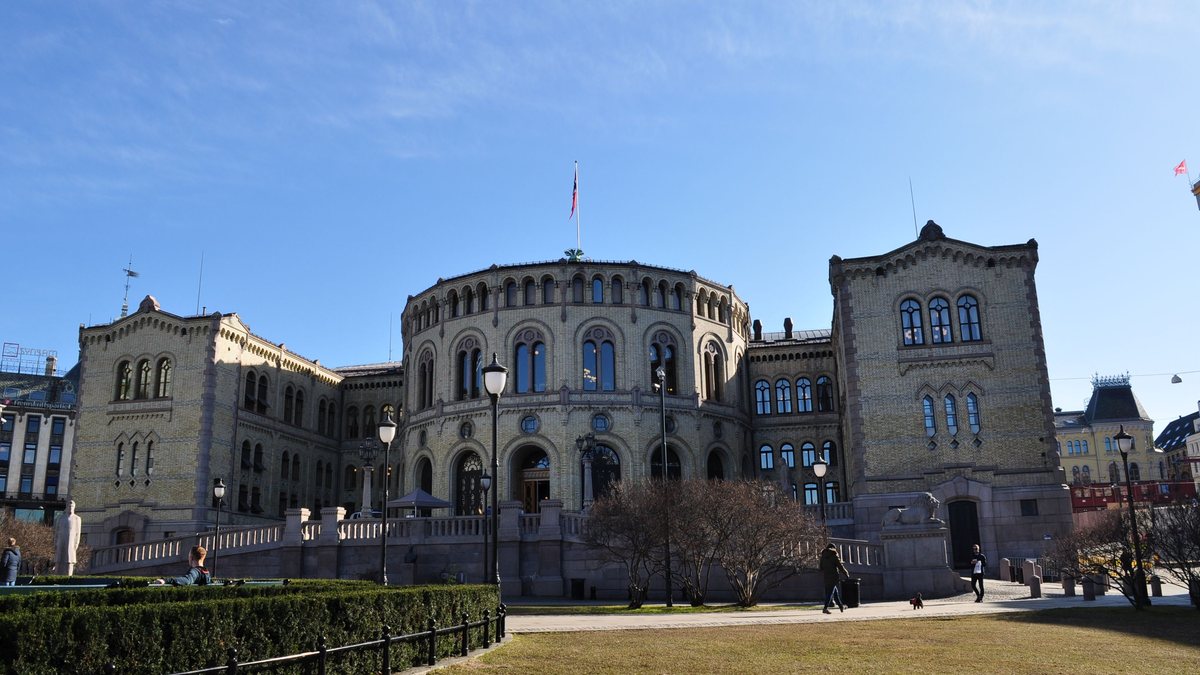
Norway is a unitary constitutional monarchy with a parliamentary system of government. The 1814 Constitution established Norway as a free, independent realm with a limited and hereditary monarchy, uniting executive power in the hands of the King and legislative power in a parliament. However, the modern political mechanism is a unitary constitutional monarchy with a parliamentary government, where the King of Norway is head of state and the prime minister is head of government. Under the Constitution, legislative, budgetary and supervisory powers are vested in the Storting, making it the focal point of the political system.
A Constitutional Monarchy Built Around One Parliament
The Constitution of the Kingdom of Norway adopted in 1814 declares Norway a free, independent, indivisible and inalienable realm with a limited and hereditary monarchy. Article 1 states that Norway is a constitutional monarchy where the King holds the executive power and power of decision but that legislative power is vested in the Storting.
The Storting is Norway’s parliament and the supreme arena for political debate and decision-making in the Kingdom of Norway, with 169 elected Members. At the national level, Norway’s governmental structure consists of three branches: the Executive Branch led by the government, the Legislative Branch, the Storting, and the Judicial Branch headed by the Norwegian Supreme Court. Norway is a constitutional monarchy, but in practice, day-to-day politics are carried out by elected representatives in a parliamentary system.
Inside the Storting: 169 Seats, Four-Year Terms, No Dissolution
The 169 members of the Storting are elected by proportional representation from 19 multi-member constituencies that align with the counties, with 150 members being constituency representatives and 19 members elected as “levelling” or “at-large” members to adjust representation in accordance with the national vote. Candidates are elected from party lists, in constituencies of varying sizes, according to a form of proportional representation, namely the modified Sainte-Laguë method.
Parliamentary elections to the Storting take place every four years; there are no by-elections, and there is no constitutional provision to dissolve the Storting between elections. The Storting is the only national political body directly elected by the people, and its composition is designed to reflect national popular votes even where district seats would give different results. The Storting cannot be dissolved and there are no by-elections, meaning that the same parliament sits for the entire four-year period.
From Bicameral Forms to a Unicameral Working Chamber
Historically, the Storting had two chambers: the Odelsting, which was the larger of the two, and the Lagting, the smaller. Both chambers were elected in the elections every four years. In 2009, the old division between the two chambers, the Odelsting and the Lagting was abolished, and the Storting became a unicameral body.
The Storting functions as a unicameral plenary chamber in legislative matters, although the internal organization divides its work between committees and plenary. In the legislative process, most proposals for new legislation originate in the executive. A Bill is first presented to the relevant Storting committee, which subsequently, if it endorses the Bill, presents it to the plenary for further dealings. When presenting a Bill to the plenary, the committee will often acknowledge or reject portions of the minority opinion. The members then vote on the committee's recommendation.
Negative Parliamentarism and the Prevalence of Minority Governments
Norway has a system of negative parliamentarism, unlike Sweden, Finland or Germany, where governments require an investiture vote in the legislature to come to office. In Norway, the prime minister and cabinet can be appointed by the King (though in practice this means by the outgoing prime minister or by the presiding officer) without the need for a special confidence vote, but the parliament can pass a vote of no confidence at any time by a majority, which would install a new cabinet.
Norway has a multi-party political system in which no single party has dominated enough to enjoy a consistent position that would count an outright parliamentary majority, contributing to a prevalence of coalition and minority governments. Minority governments have governed for about 41 of the last 80 years in a study of Norway going back to 1945 in political science studies using parliamentary data The reason for this is the combination of their multi-party system, electoral system, historical practice, and norms in their politics.
How the Budget Shows Who Really Governs
The annual Fiscal Budget is where the legislature decides both tax expenditures and revenues, including giving the government money to enact its policies. The budget process is bound by a constitutional limit: there can be a maximum of 2½ months elapsed between the day the fiscal budget is presented to the Storting and the day it is finally adopted. When Parliament decides the budget, it essentially decides whether the government's economic policy can go ahead or not.
The budget debate, where the governmental parties and any parties supporting the government present their voting intentions in conjunction with the budget, is the most important decision for the parliamentary system as it mirrors which parties are supporting the government economically. The fiscal budget debate in mid-October is a key moment in the parliamentary political calendar, with a crucial role in the internal working of the Norwegian parliamentary system.
The budget debate is one of the key moments in the Norwegian parliamentary year, where the government's economic policy is confirmed or denied. As a result, minorities have to seek support from other parties to pass the budget. In December 2025, Prime Minister Jonas Gahr Støre's Labour Party government, which did not hold an outright majority, had to secure a deal with four smaller left-wing parties in the Storting to pass the 2026 fiscal budget and prevent a potential cabinet crisis. This budget deal reflected both the necessity for a minority cabinet to continually seek support and the signal role budget passage has in Norwegian politics.
Reading Norwegian Political Headlines Through the System
A coalition strategy is a prerequisite for a political grouping governing either as a minority or a majority as when election results are inconclusive. Party discipline in the legislature is generally strong, even among opposition members. Members balance their roles as party representatives and constituency delegates, though party lines usually prevail.
The details of this process are in function of the rules of the party, the results, number of seats won, who their representatives are, and all sorts of informal rules that politicians themselves have to operate under. Few Norwegian governments have had a majority in the Storting, and most Norwegian governments have thus been minorities. The most common pattern has been for the sitting government, after an election, to negotiate a majority with a quite small group of parliamentary parties. This implies that the direction of the policies in the consequential sector is decided with inputs from a few parties of the coalition.
Knowing how the Storting functions, including its formal rules and internal workings, is critical to interpreting the political headlines coming from Norway. The proportional representation and levelling seats mean that attention should not go to specific district results, but to national totals and the impact on overall Storting numbers. The fixed four-year terms and lack of by-elections mean that crises may linger for years until the next scheduled election.
In the first sentence, recap that all power lies with the Storting and its actions. "Ultimately, all Norwegian politics depends on a leader or party maneuvering minority support in the Storting to secure budget deals and pass legislation. Adjust your reading of the news accordingly."