Electricity Prices in Norway: Price Zones, Hydropower and Why the South Pays More Than the North
Norway's electricity prices vary significantly by region, with the average price in NO2 nearly six times higher than in NO4. To understand this, it’s important to know that the country is deliberately split into five bidding zones (NO1–NO5) to manage grid bottlenecks.
This structure, together with hydropower storage levels and international cable exchanges, explains why southern bidding zones NO1, NO2 and NO5 usually pay more. The national electricity support scheme also affects household bills: many of the headline prices quoted account for substantial state compensation.
Five bidding zones, one country
Norway is split into five electricity price (bidding) areas: NO1 (Southeast-Norway), NO2 (Southwest-Norway), NO3 (Mid-Norway), NO4 (North-Norway) and NO5 (West-Norway). This zoning reflects the bottlenecks in the north-south electricity corridors, affecting how much it costs to transmit power between regions.
These five zones are the basis for Norway's national electricity pricing. NO1 covers Eastern Norway including Oslo, NO2 covers Southern Norway including Stavanger, NO3 covers the central regions around Trondheim, NO4 the far north around Tromsø, and NO5 the western fjord areas near Bergen.
Regional price zones are set up to manage inevitable grid bottlenecks, making it more economical to allow bidding within each area.
Why some zones pay more than others
The price differences between zones can be substantial. NO2 (Southwest-Norway) saw an average spot price of around 1,592.90 NOK/MWh, while NO4 (North-Norway) averaged 280.84 NOK/MWh, nearly six times lower.
Southern and western prices tend to be higher due to multiple factors:
- NO4 has a lower price due to limited transmission capacity towards the populated south. This means power from the north is relatively expensive to bring south, especially when there is high demand in southern Norway.
- Interconnectors to mainland Europe have lowered prices in Norway as a whole, but they are concentrated in the south. Cables from NO1 (Southeast-Norway) and NO2 (Southwest-Norway) link to Germany, the Netherlands, Great Britain and Denmark. This exposes these bidding zones to the higher electricity prices in continental Europe.
It’s a mistake to assume that southern prices are simply pushing apart without considering the transmission and interconnector flows. Southern areas pay more for power because the grid and cable structure largely funnel northern generation to the south, which is both more densely populated and exposed to international trade.
Hydropower, reservoirs and the Nordic market
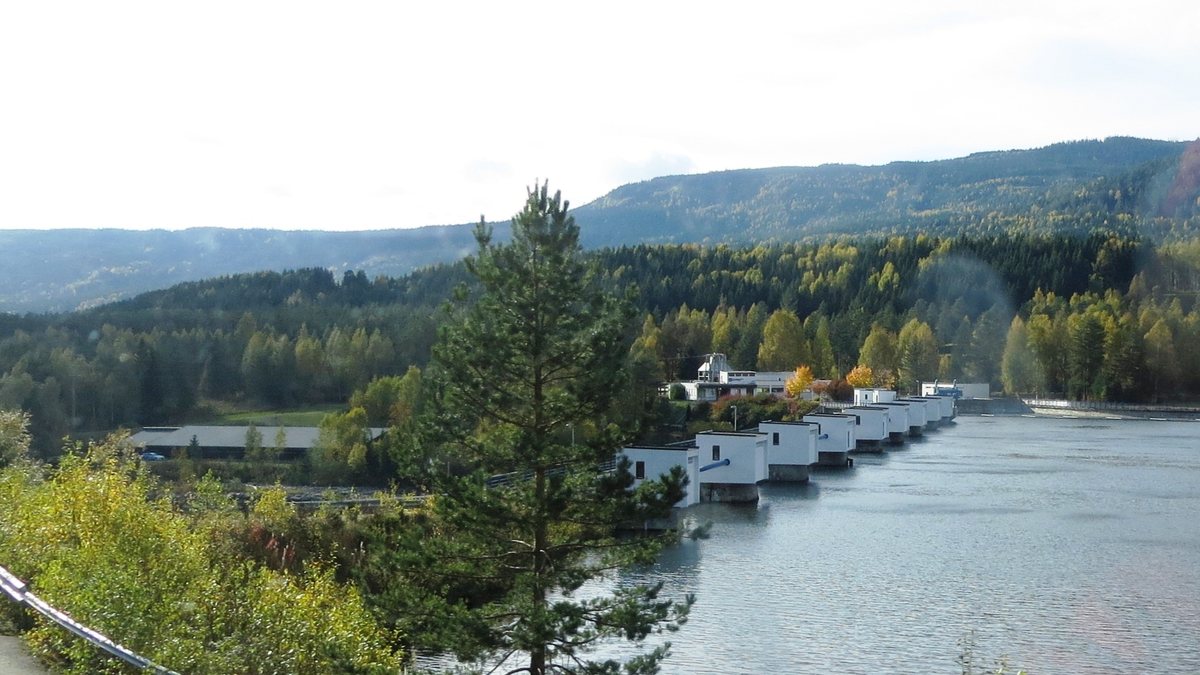
Norway’s hydropower system is a major factor in the structuring of price zones, since power is transmitted in large quantities from upstream (primarily north) to downstream (primarily south) based on hydropower storage. Transmission capacity from north to south, combined with the concentration of interconnectors in the south, feeds southern pricing. The Norwegian market is characterized as being hydropower-based and integrated with the rest of Europe.
Consumption portfolios and total electricity demand also shape the Nordic market; where demand is high, especially in densely-populated areas, higher prices are more common.
The Electricity Support Act: how the state cuts the bill
In December 2021, Norway introduced the Electricity Support Act, temporarily enabling the state to compensate 55% of household electricity costs above a price threshold (70 øre per kWh for December 2021, increased to 80 øre per kWh for January–March 2022). This period was originally planned to expire 1 July 2022, but was extended until 31 March 2023.
As of 1 April 2022, the support level in the act was increased to 90% of costs above the threshold, measured on an hour-by-hour basis in the zone of the household's consumption. The threshold was increased to 73 øre per kWh from 1 January 2024. Consumption is capped at 5,000 kWh per household per year.
This means that the Electricity Support Act calculation now compensates 90% of the price above 70-73 øre/kWh for each hour, based on the hourly spot price in each household’s own bidding zone, not the specific contract rate paid by the household. An illustrative example shows the scheme paying 90% of the price above 73øre/kWh (for example, if the spot price was 120 øre/kWh, the compensation would be (120-73) øre/kWh × 90%, i.e. 43.7 øre/kWh).
What households actually see on the bill
Households are seeing significantly different effective pricing based on their location and the support scheme.
For example, the indicative residential price in NO2 (South-West) jumped from 97 øre/kWh in January 2025 to 154 øre/kWh in January 2026, while NO4 (North) rose from 11 øre/kWh to 83 øre/kWh over the same period, VAT-exempt. These headline prices are substantially lower than the spot prices shown earlier, as they incorporate the state compensation.
In 2023, the average electricity support deduction was 24.3 øre/kWh, way down from 91.4 øre/kWh in 2022. Households in northern NO4 are also generally exempt from VAT, further lowering their bills.
How big the support has been – and for how long
In December 2022, the Norwegian government estimated that electricity support to households for the years 2022-2023 could amount to NOK 70 billion (€6.6 billion). Estimated costs were NOK 33.2 billion (€3.1 billion) in 2022 and NOK 44.7 billion (€4.2 billion) in 2023.
The state has committed a significant amount of its budget to the “Electricity Support Act”, compensating 90% of the electricity price that exceeds 70-73 øre/kWh for both winter and summer.